
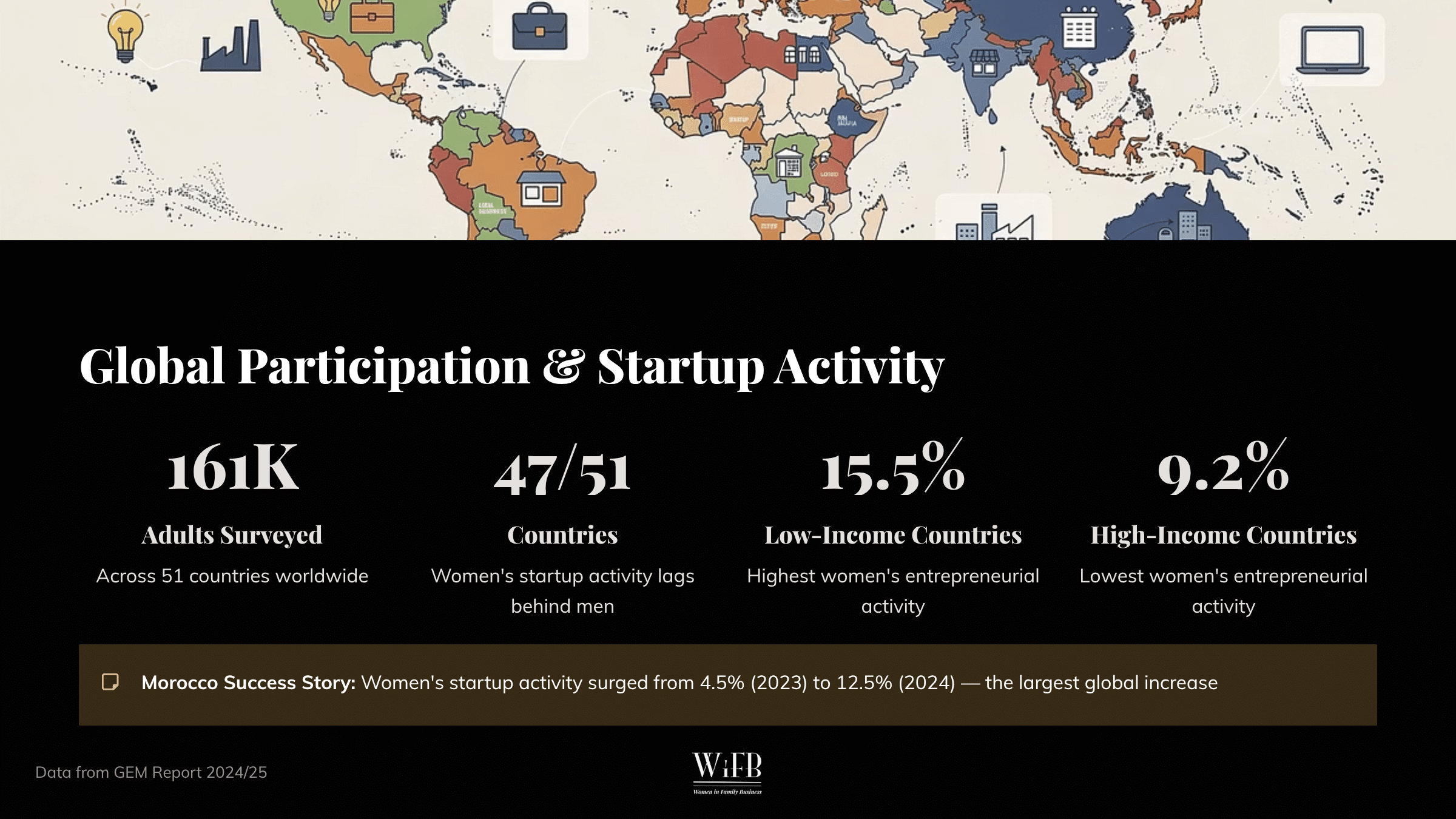
The Global Entrepreneurship Monitor recently published the results of its 2024/2025 Women’s Entrepreneurship Report, presenting a comprehensive outlook on women’s entrepreneurial activity worldwide. This year’s survey of 161,528 adults across 51 countries offers important insights into where progress is being made – as well as where significant gaps remain. While women continue to demonstrate resilience and innovation, the GEM report also highlights the persistent barriers they face and the ongoing disparities in opportunity between women and their male counterparts.
Startup Activity, Global Gaps, and High-Potential Ventures
The GEM report found that women’s startup activity continued to lag behind that of men in 47 of the 51 countries surveyed. However, the size of this gap varied widely by region and income level. Women in low-income countries reported the highest levels of activity (15.5%), often reflecting entrepreneurship driven by necessity due to limited employment opportunities. In contrast, high-income countries reported the lowest participation rates for women (9.2%). Notably, Morocco showed the largest increase in women’s startup activity, rising from 4.5% in 2023 to 12.5% in 2024.
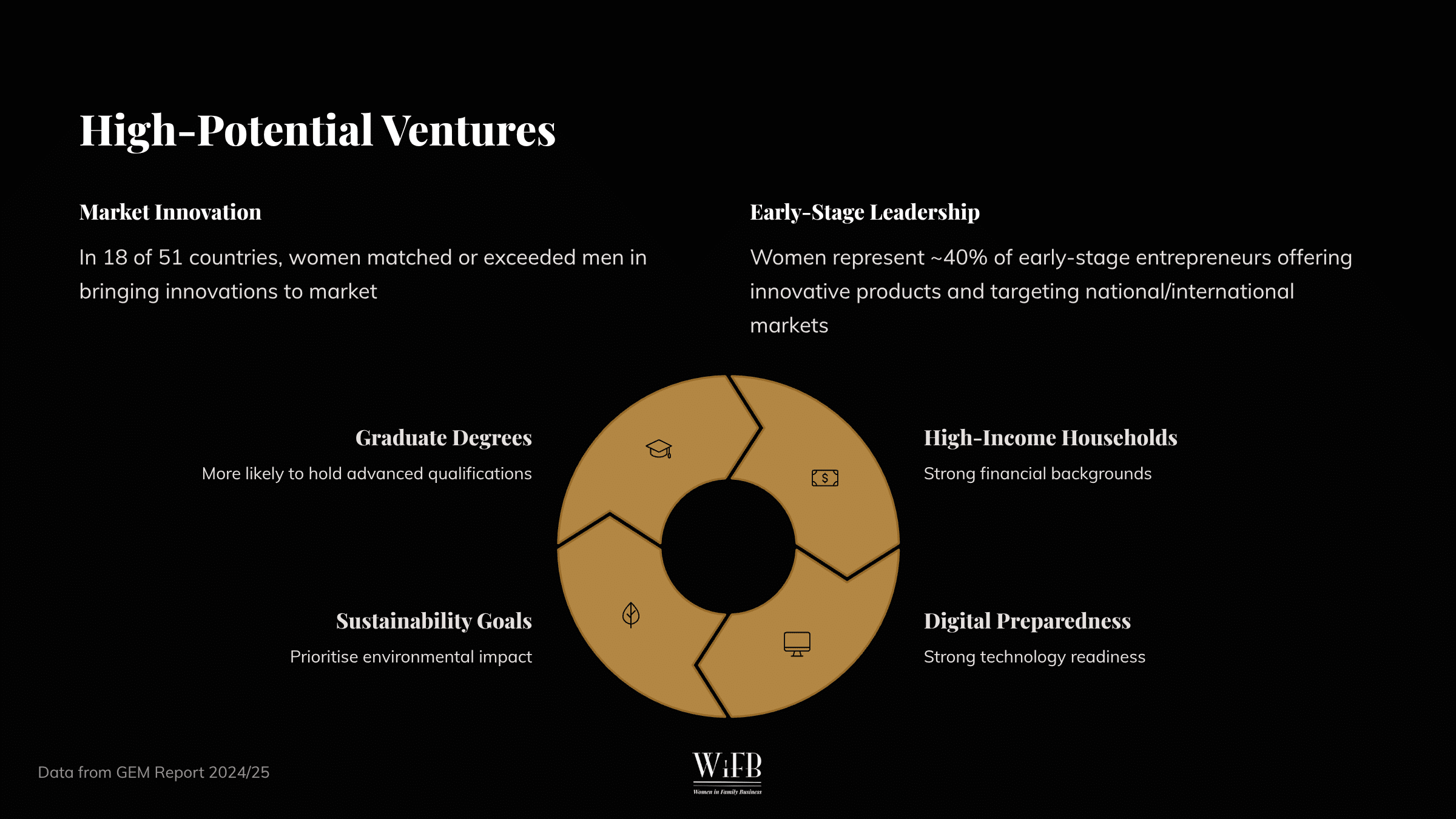
Despite this overall under-representation, women around the world are leading a substantial share of high-potential startups – those operating in innovation-driven sectors, targeting larger markets, or employing bigger teams. In 18 of the 51 countries examined, women matched or exceeded men in bringing innovations to market. GEM’s survey also found that high-potential women entrepreneurs are typically more likely to hold graduate degrees, come from high-income households (a characteristic shared with high-potential male entrepreneurs), and report a strong digital preparedness and a commitment to sustainability goals. Globally, women represented around two-fifths of early-stage entrepreneurs offering innovative products and focusing on national and international markets.
Determining Motivations
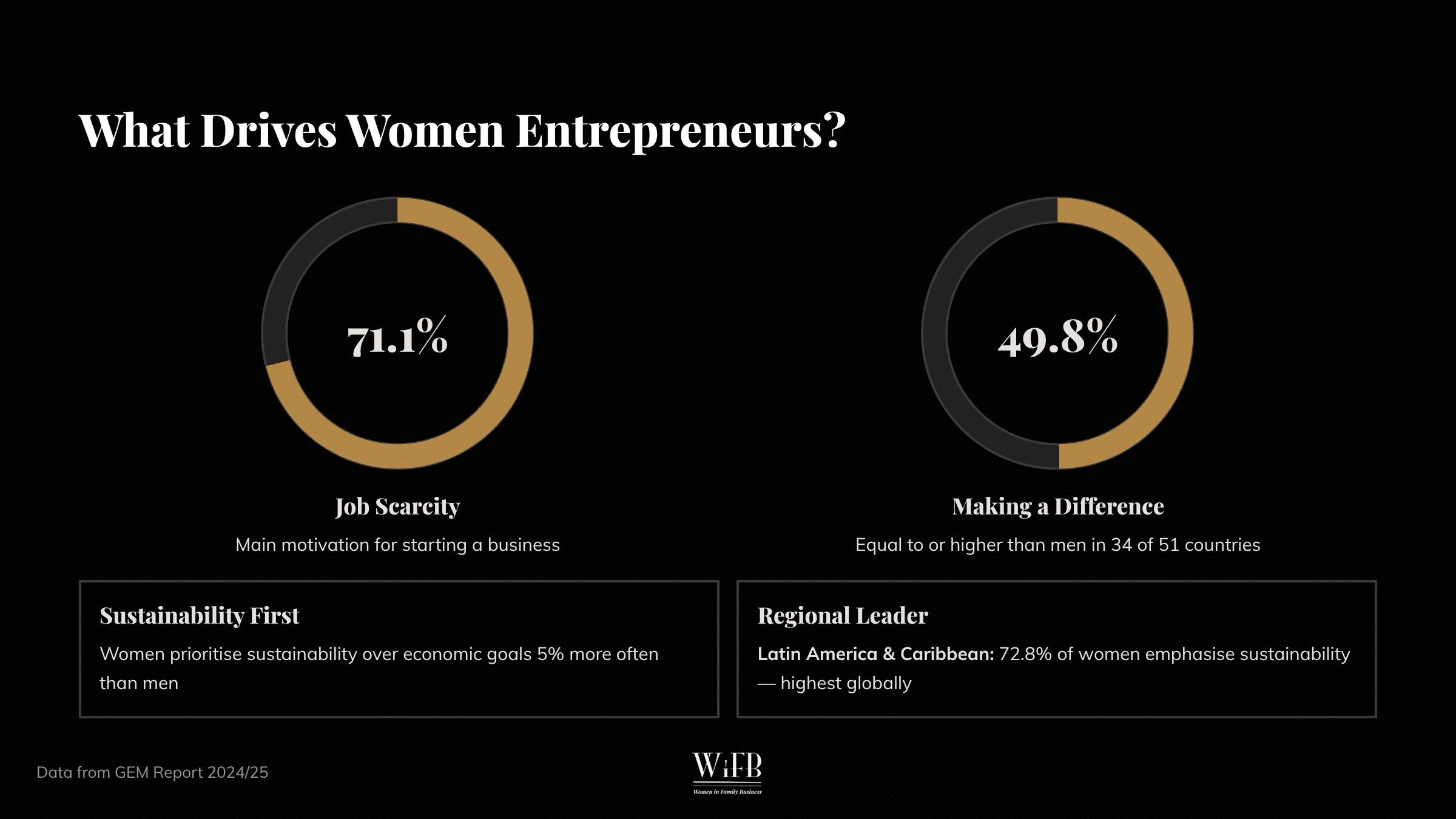
The motivations driving women entrepreneurs are complex, reflecting both economic opportunity and societal constraints. Across the countries studied, job scarcity was reported as the strongest motivator for pursuing entrepreneurship (71.1%), underscoring how self-employment remains a necessary path for some women to generate income amid structural or economic pressures.
Nearly half of women founders reported being motivated to “make a difference in the world” (49.8%), a rate equal to or higher than that of male founders in 34 of the 51 countries surveyed. Women entrepreneurs also consistently place a higher priority on integrating social and environmental goals into their businesses compared with men. Globally, women prioritised sustainability over economic goals approximately 5% more often than men. Regionally, women in Latin America and the Caribbean showed the highest emphasis on sustainability (72.8%).
The Digital Divide
Globally, women remain significantly less prominent than men in technology-intensive fields. Women were less than half as likely as men to start businesses in information and communications technology, with 2.3% of women compared with 6.1% of men. This digital gap is also evident in the adoption of emerging technologies, with women prioritising artificial intelligence 11% less often than men in their business activities.
Globally, women were most engaged in wholesale and retail trade, showing notably higher participation in government and social services (19.1% of women compared with 10.3% of men). In addition, women have established a strong proficiency with digital tools used for communication and commerce, meeting or exceeding men in every region when rating social media as important for business purposes.
Business Continuity and Care
The GEM report highlights how structural inequalities sharply impact women’s ability to sustain their businesses. It found that women were almost 50% more likely than men to exit a business due to family or personal reasons, suggesting that household responsibilities continue to disrupt women’s entrepreneurial pursuits disproportionately. Conversely, men were more likely to exit a business because of other opportunities, tax regulations, or team conflicts.
Although the women surveyed reported a lack of financial resources as a reason for business exit at similar global rates to men, women in low-income countries were the most affected. In these regions, lack of finance was indicated as a reason for exiting their business 36% of the time, compared with 25.9% in high-income countries.
Policy Recommendations for Inclusive Ecosystems
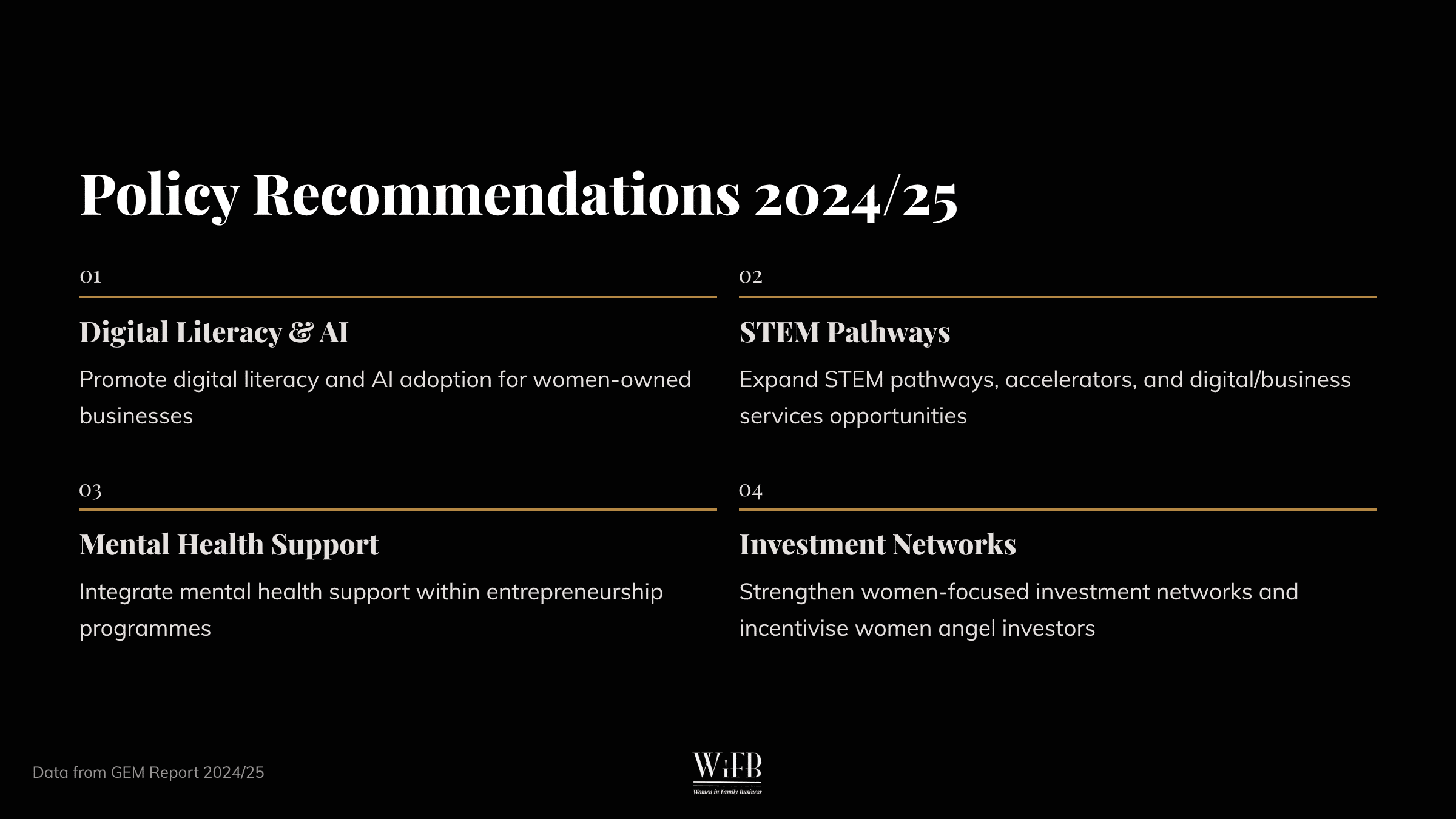
Based on this year’s results, the 2024/2025 Women’s Entrepreneurship Report outlines key policy recommendations for addressing the clear, persistent entrepreneurial disparities that remain between genders globally:
- Promoting digital and AI adoption by offering tailored digital literacy and AI integration programmes to help women-owned businesses adopt transformative technologies.
- Encouraging women’s entry into technology, digital, and business services through targeted accelerators and STEM education initiatives.
- Integrating support into programmes to help women manage mental health challenges and sustain long-term success, recognising the stress caused by financial needs and work-life balance.
- Incentivising women to participate as angel investors and strengthening women-focused investment networks to increase access to capital.
More Intentional and Coordinated Efforts
GEM’s annual report underscores the urgent need to dismantle structural barriers and invest the infrastructures that support the ambitions of women entrepreneurs and enable them to thrive. Only a deliberate and sustained approach will ensure that women entrepreneurs are positioned not just to participate, but to lead in innovation and drive sustainable economic growth globally. The findings offer a clear conclusion: supporting women’s entrepreneurship is not only a matter of fairness but also a strategic advantage that strengthens businesses, communities, and economies for the long term.